Say what it costs before asking
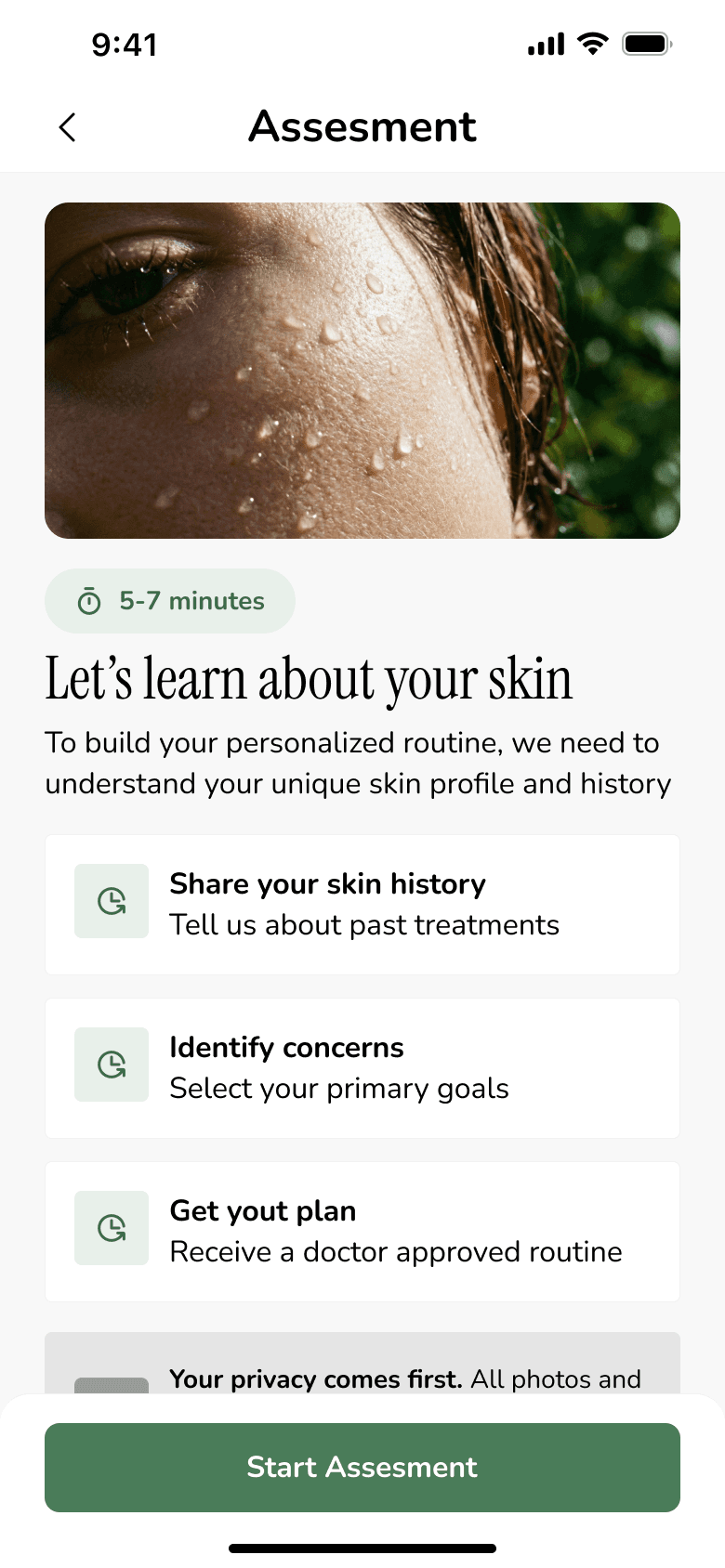
The assessment opens with a time estimate and the three things it will ask for. Nobody starts a questionnaire without knowing how long it is.

Skincare that starts with understanding, not selling.
People don't struggle with skincare because they don't care. They struggle because they're overwhelmed.
Dermacare is a concept for a pharmacy that guides before it sells. Most shops treat skin type as one filter and recommend the same best sellers to everyone, which leaves people guessing between marketing and what will work for them.
The idea is to ask first: a short assessment builds a skin profile, and the shop then shows what matches it and says why.
Thousands of products make conflicting claims. Too much choice ends in abandonment or a purchase that is regretted.
Curate first, expand later. Personal matches lead; browsing the whole shop is the second path.
People will give time if each question feels like it has a purpose.
Disclose progressively and teach along the way, so each question explains something while it collects an answer.
The assessment opens with a time estimate and the three things it will ask for. Nobody starts a questionnaire without knowing how long it is.
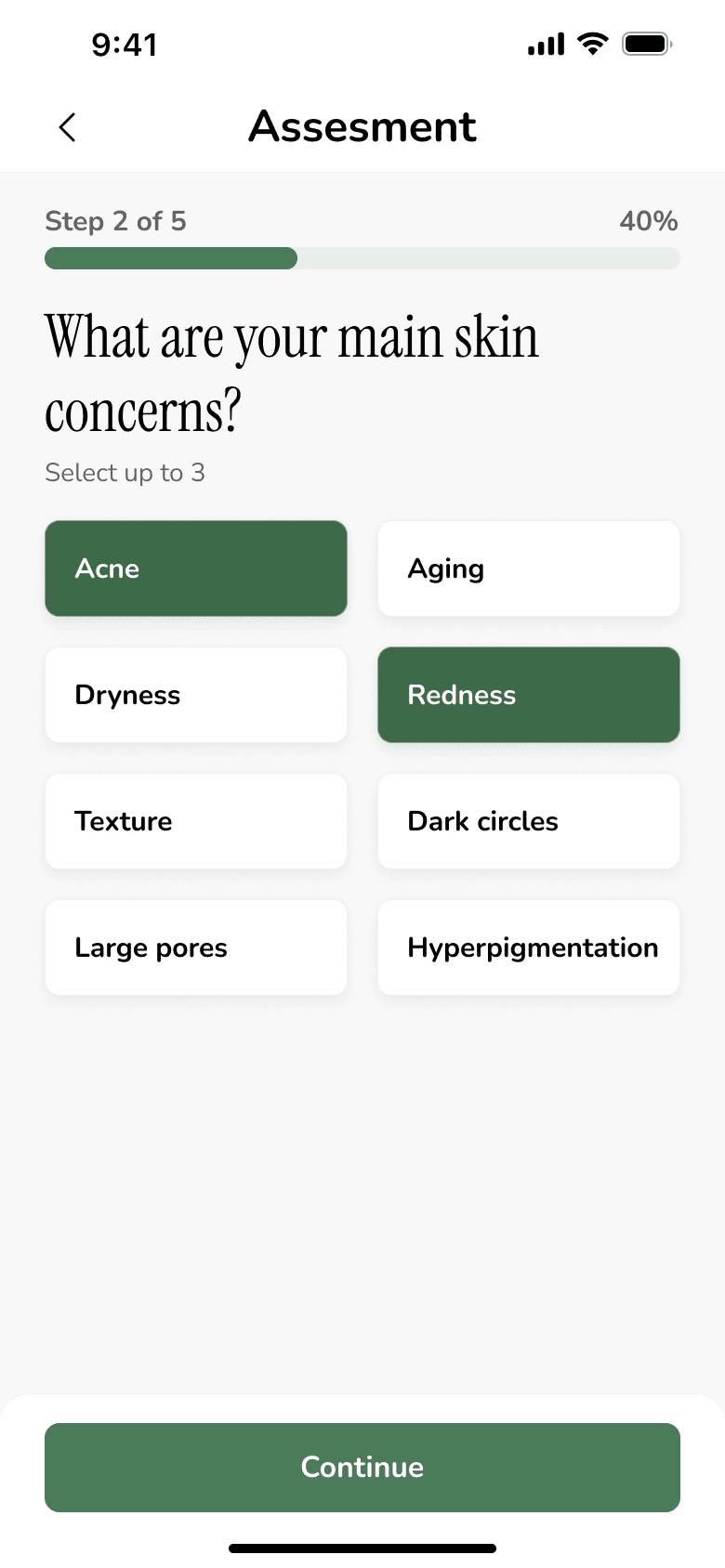
Skin types come with a plain description, so picking one is also learning what it means. Concerns are capped at three, and lifestyle uses labelled scales in place of free text.
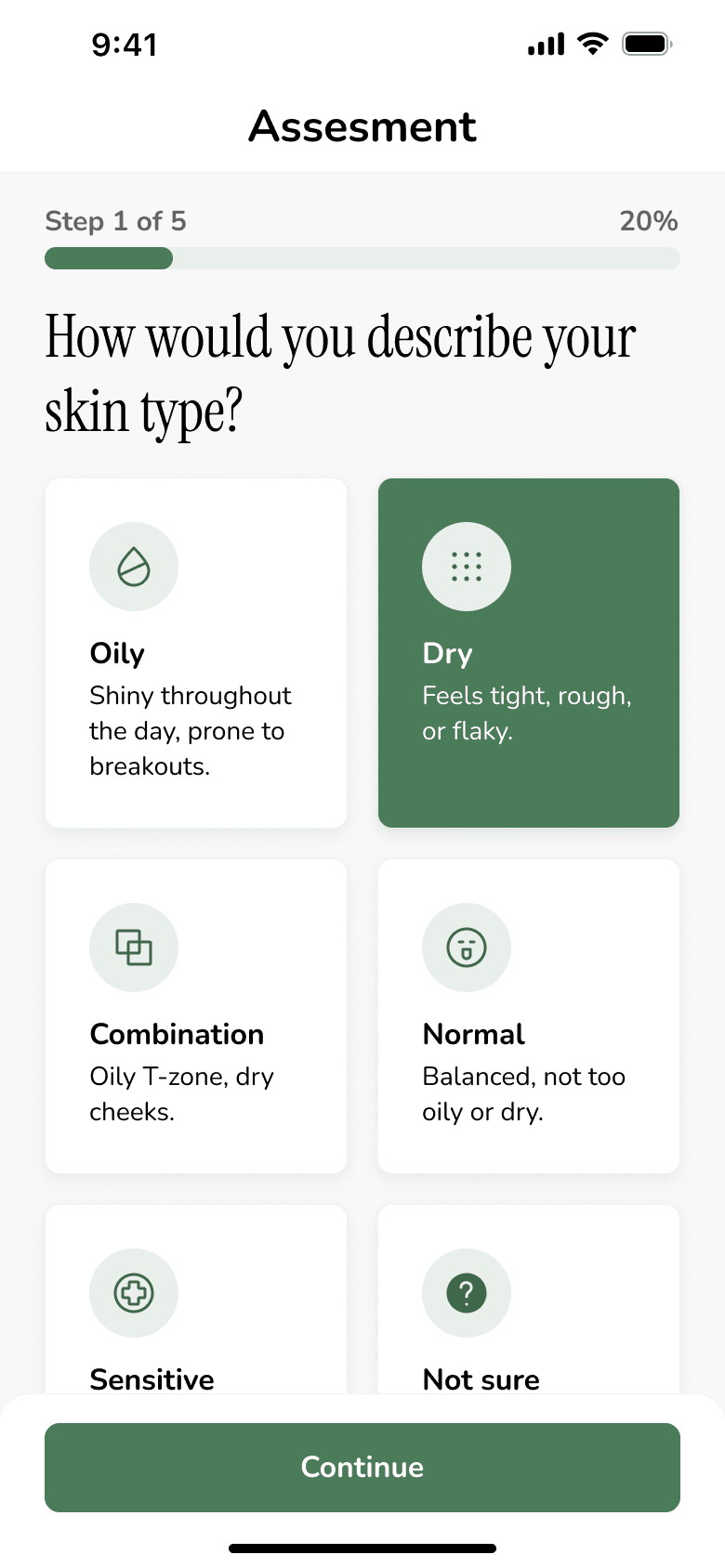
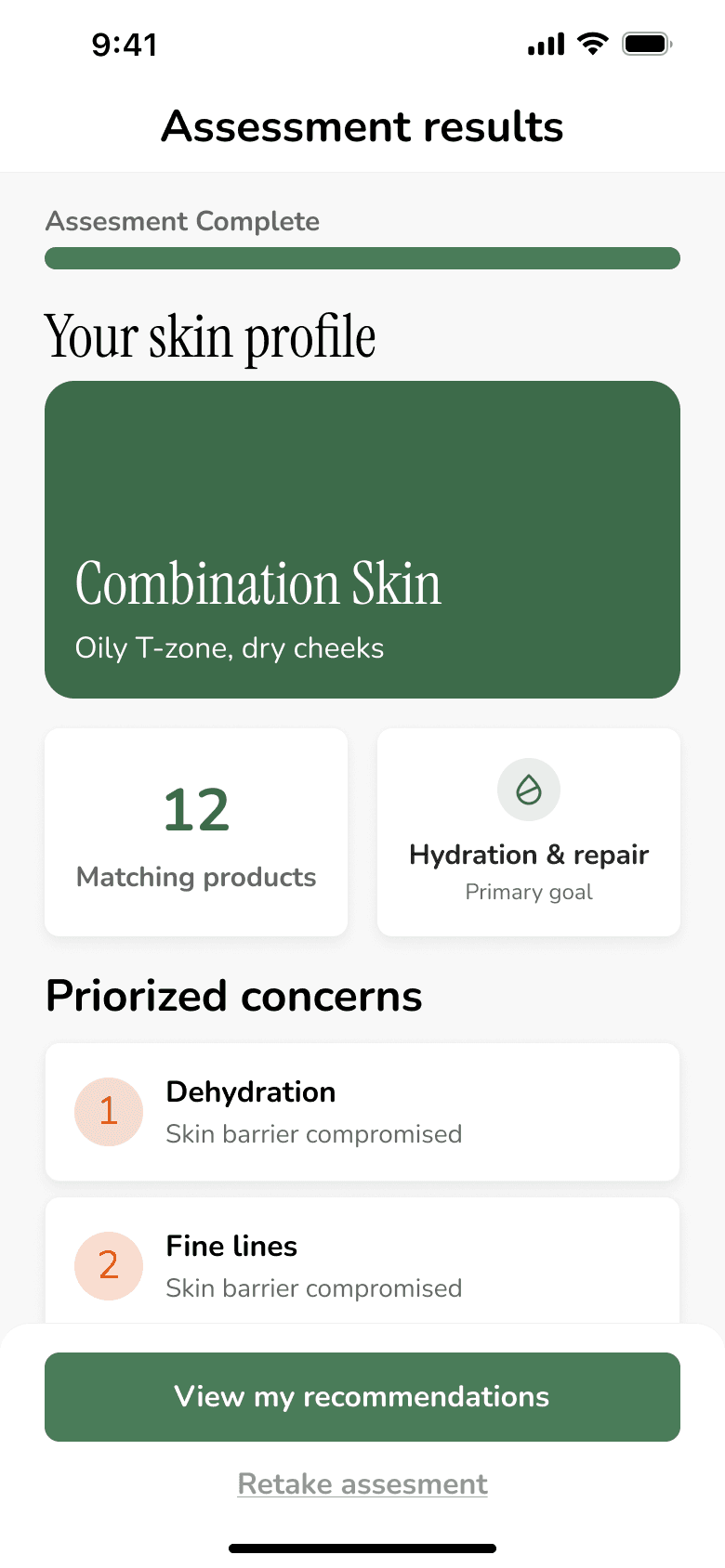
The result is a skin profile first: type, goal and concerns in order of priority. Only then does the shop open, already sorted for that profile.
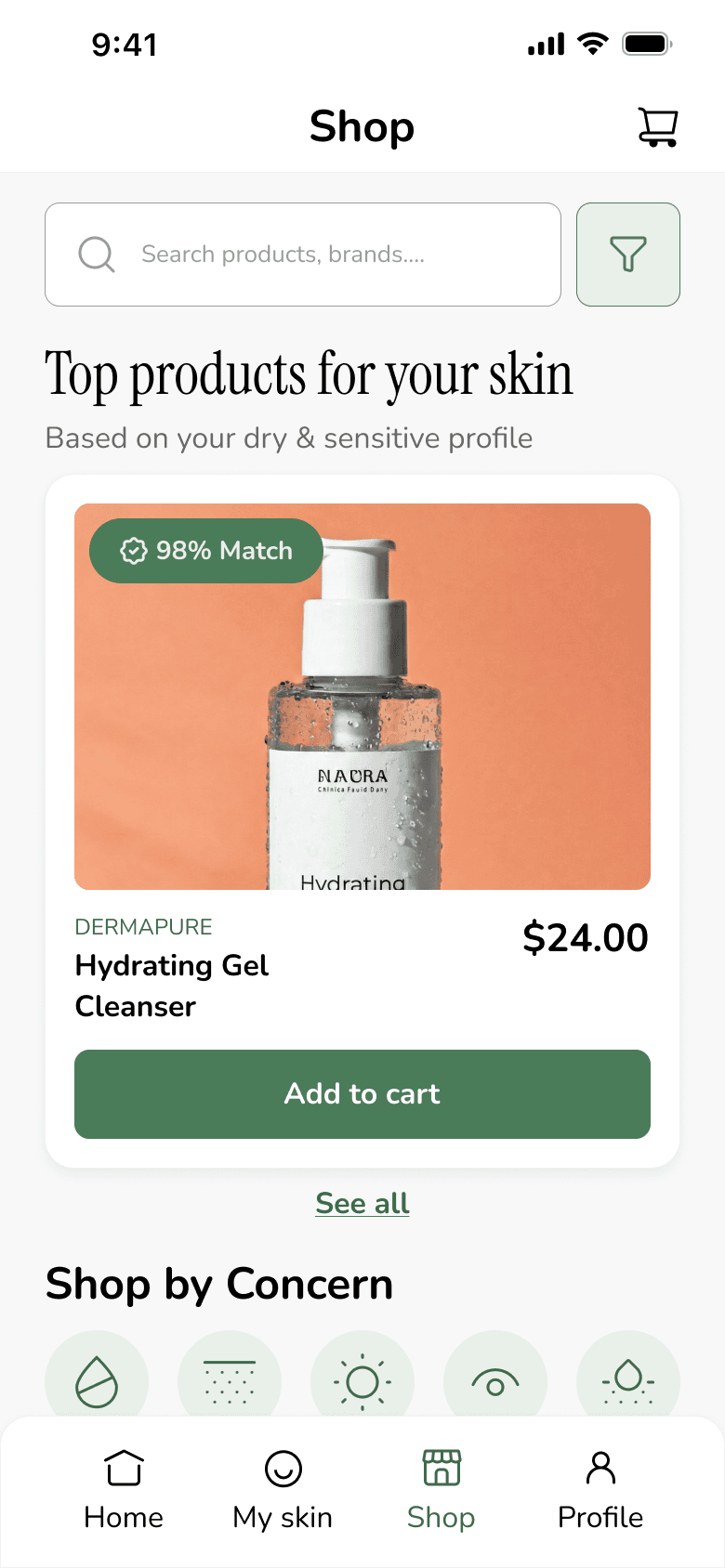
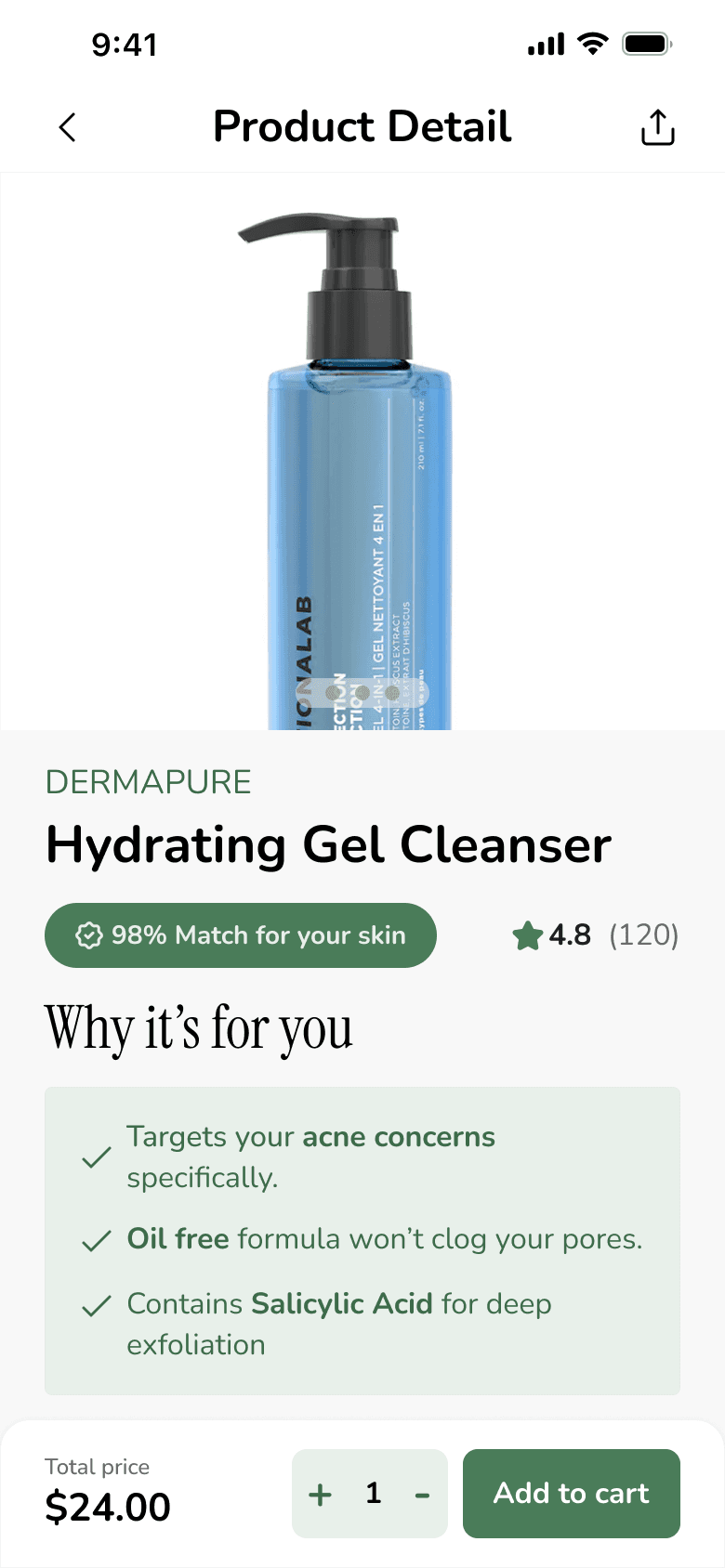
A product page leads with how well it matches and why, in three short lines tied to the answers given. The general shop is still there for anyone who wants to browse.
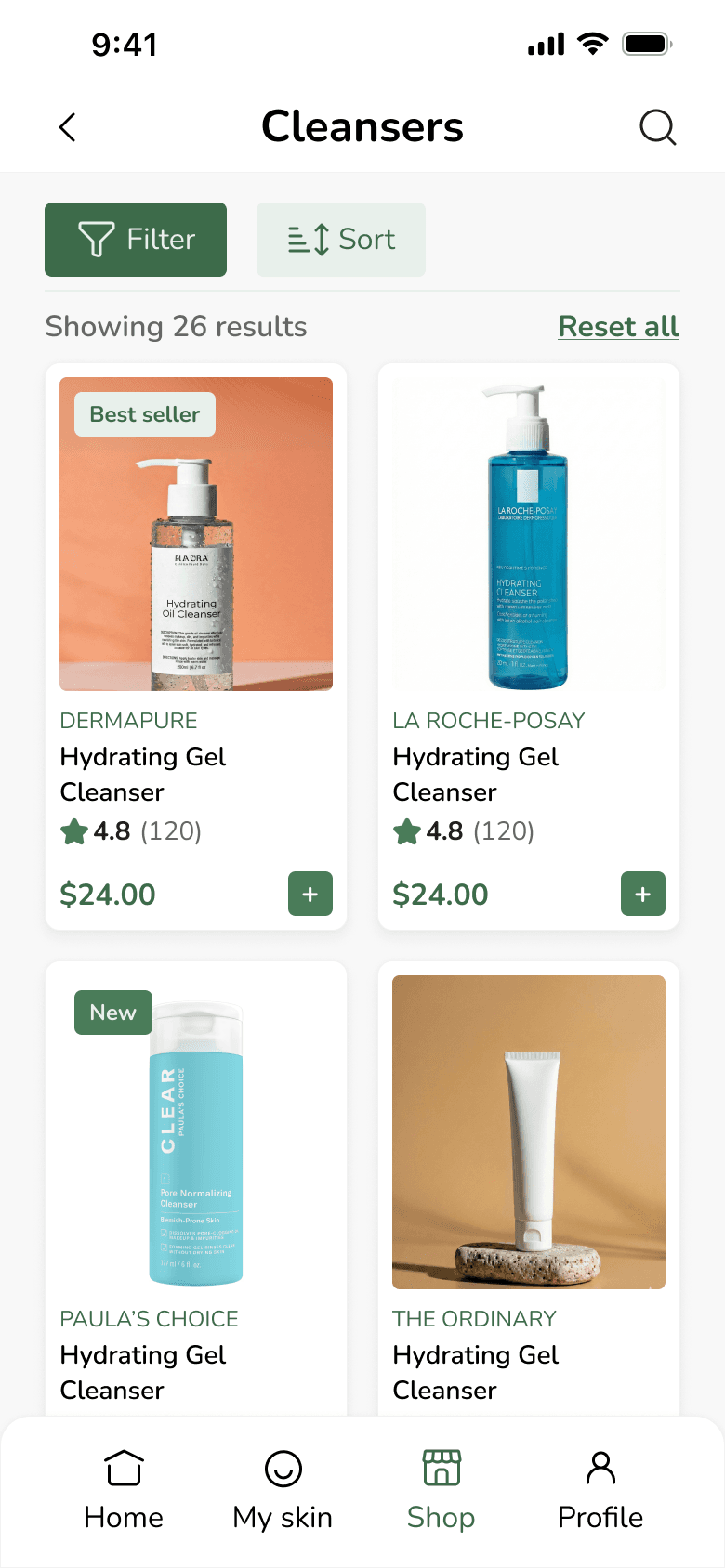
Dermatological guidance without the jargon.
Always explain why something matches.
Teach while guiding the decision.
Clinical credibility in every interaction.